Interactive learning module for dental professionals
Sleep - Disordered Breathing and Orthodontics
Recognise risk, screen appropriately, refer for diagnosis and plan phenotype-based orthodontic care within a multidisciplinary sleep team. This module integrates foundational science, assessment, management options and clinical application.
0% of the module complete on this device.
To install on iPhone or iPad: tap the Share button in Safari, then choose "Add to Home Screen".
Rationale of the module
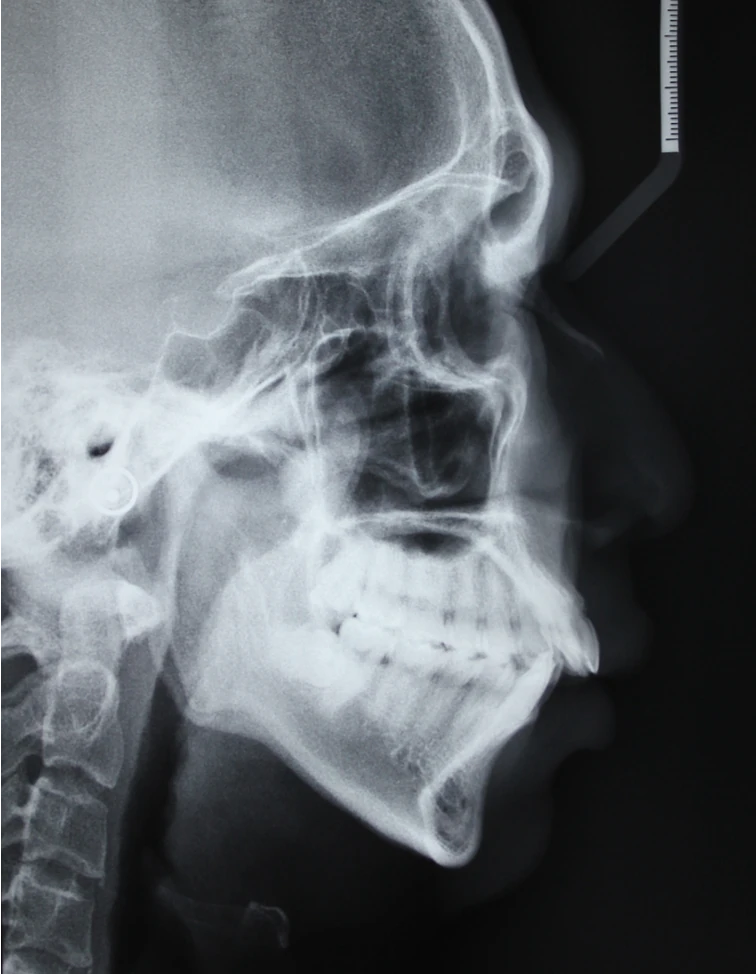
Sleep-disordered breathing, particularly obstructive sleep apnoea, has important implications for general health and craniofacial care. Dentists and orthodontists may recognise the risk indicators during routine examination, diagnosis and treatment planning.
This module supports appropriate recognition, screening, referral, craniofacial assessment and multidisciplinary orthodontic care. It does not replace a medical diagnosis or sleep investigation.
Target participants
- Dental officers
- General dental practitioners
- Orthodontic postgraduate trainees
- Orthodontists
Learning outcomes
By the end of this module, learners should be able to:
- Explain the spectrum of sleep-disordered breathing and the key mechanisms involved in obstructive sleep apnoea.
- Recognise common symptoms, risk indicators and craniofacial features, and use screening tools appropriately.
- Describe the orthodontic and craniofacial assessment of a patient with suspected or diagnosed OSA, including the appropriate role and limitations of imaging and sleep investigations.
- Explain the indications, limitations and clinical considerations for relevant orthodontic and dentofacial interventions.
- Plan an appropriate multidisciplinary clinical workflow, including referral, communication and follow-up.
- Apply the module concepts to clinical cases and interpret treatment outcomes objectively.
Assessment
- Pre-test to identify baseline knowledge
- Knowledge checks embedded within learning sections
- Clinical reasoning questions and case-based application
- Interactive clinical cases
- Final assessment with feedback
Interactive activities
- Visual explanations and original diagrams
- Interactive tools, workflows and decision pathways
- Think-and-reveal clinical reasoning activities
- Sorting tasks, calculators and short quizzes
- Case-based learning with immediate feedback
- Quick clinical guide for review and consolidation
Contributors
Course mapping
The learning outcomes are mapped to the relevant sections and assessment activities below.
| Learning outcome | Main module sections | Learning and assessment evidence |
|---|---|---|
| LO1 | Sections 1–6: sleep, SDB, OSA, airway anatomy, pathophysiology and clinical significance | Pre-test, embedded checks and final assessment |
| LO2 | Sections 7–8: screening and craniofacial assessment | Interactive activities, knowledge checks and cases |
| LO3 | Sections 8–10: craniofacial assessment, imaging, sleep investigation and clinical workflow | Think activities, workflow tasks, checks and cases |
| LO4 | Sections 11–15: paediatric OSA, oral appliances, maxillary expansion, orthognathic surgery and other approaches | Clinical reasoning, section checks, cases and final assessment |
| LO5 | Sections 10 and 16–17: clinical workflow, multidisciplinary care and clinical cases | Case-based application and final assessment |
| LO6 | Sections 17–19: clinical cases, final assessment and quick clinical guide | Clinical cases, final assessment and guided review |
Learning pathway
0 of 20 sections complete.
Apply and review
0 of 3 complete
Five principles that run through every section
- Screening does not establish a diagnosis of OSA.
- Imaging alone cannot diagnose OSA.
- Treatment should be based on appropriate diagnosis, patient phenotype and multidisciplinary assessment.
- Orthodontic interventions are appropriate only in selected patients.
- Treatment response should be objectively reassessed where appropriate.
How the learning activities work
Short, focused explanations with APA citations linked to the book chapter, guideline section or article page.
Original diagrams and interactive tools: anatomy, airway collapse, MAD titration, workflows.
A clinical question to reason through before you see the discussion.
Sorting tasks, calculators and short quizzes with instant feedback.
Two to five questions. Answering them all completes the section.
One line to carry into clinic.
References
- Ayuse, T., Kirkness, J., Sanuki, T., Kurata, S., & Okayasu, I. (2016). Pathogenesis of upper airway obstruction and mechanical intervention during sedation and sleep. Journal of Dental Sleep Medicine, 3(1), 11–19. https://doi.org/10.15331/jdsm.5364
- Bailey, D. R., & Attanasio, R. (2022). Dental management of sleep disorders (2nd ed.). Wiley.
- Behrents, R. G., Shelgikar, A. V., Conley, R. S., Flores-Mir, C., Hans, M., Levine, M., McNamara, J. A., Palomo, J. M., Pliska, B., Stockstill, J. W., Wise, J., Murphy, S., Nagel, N. J., & Hittner, J. (2019). Obstructive sleep apnea and orthodontics: An American Association of Orthodontists white paper. American Journal of Orthodontics and Dentofacial Orthopedics, 156(1), 13–28. https://doi.org/10.1016/j.ajodo.2019.04.009
- Bonsignore, M. R., Saaresranta, T., & Riha, R. L. (2019). Sex differences in obstructive sleep apnoea. European Respiratory Review, 28(154), Article 190030. https://doi.org/10.1183/16000617.0030-2019
- Demerjian, G. G., Patel, M., Chiappelli, F., & Barkhordarian, A. (Eds.). (2022). Dental sleep medicine: A clinical guide. Springer. https://doi.org/10.1007/978-3-031-10646-0
- de Vries, G. E., Doff, M. H. J., Hoekema, A., Kerstjens, H. A. M., & Wijkstra, P. J. (2016). Continuous positive airway pressure and oral appliance hybrid therapy in obstructive sleep apnea: Patient comfort, compliance, and preference: A pilot study. Journal of Dental Sleep Medicine, 3(1), 5–10. https://doi.org/10.15331/jdsm.5362
- Ferati, K., Bexheti-Ferati, A., Palermo, A., Pezzolla, C., Trilli, I., Sardano, R., Latini, G., Inchingolo, A. D., Inchingolo, A. M., Malcangi, G., Inchingolo, F., Dipalma, G., & Mancini, A. (2024). Diagnosis and orthodontic treatment of obstructive sleep apnea syndrome children—A systematic review. Diagnostics, 14(3), Article 289. https://doi.org/10.3390/diagnostics14030289
- Hogg, J. J. (2016). Remote controlled mandibular positional device to determine oral appliance efficacy and therapeutic protrusive position. Journal of Dental Sleep Medicine, 3(1), 29–30. https://doi.org/10.15331/jdsm.5370
- Hörmann, K., & Verse, T. (2010). Surgery for sleep disordered breathing (2nd ed.). Springer. https://doi.org/10.1007/978-3-540-77786-1
- Kazmierski, R. H. (2024). Obstructive sleep apnea: What is an orthodontist’s role? Progress in Orthodontics, 25(1), Article 21. https://doi.org/10.1186/s40510-024-00524-4
- Kim, K.-A., Kim, S.-J., & Yoon, A. (2025). Craniofacial anatomical determinants of pediatric sleep-disordered breathing: A comprehensive review. Journal of Prosthodontics, 34(S1), 26–34. https://doi.org/10.1111/jopr.13984
- Kim, K. B., Movahed, R., Malhotra, R. K., & Stanley, J. J. (Eds.). (2021). Management of obstructive sleep apnea: An evidence-based, multidisciplinary textbook. Springer. https://doi.org/10.1007/978-3-030-54146-0
- Kim, S.-J., & Kim, K. B. (Eds.). (2020). Orthodontics in obstructive sleep apnea patients: A guide to diagnosis, treatment planning, and interventions. Springer. https://doi.org/10.1007/978-3-030-24413-2
- Kuhlmann, U., Bormann, F. G., & Becker, H. F. (2009). Obstructive sleep apnoea: Clinical signs, diagnosis and treatment. Nephrology Dialysis Transplantation, 24(1), 8–14. https://doi.org/10.1093/ndt/gfn510
- Lima Illescas, M. V., Aucapiña Aguilar, D. C., & Vallejo Ledesma, L. P. (2023). A review on the influence of rapid maxillary expansion and mandibular advancement for treating obstructive sleep apnea in children. Journal of Clinical Pediatric Dentistry, 47(1), 9–16. https://doi.org/10.22514/jocpd.2022.035
- Makhbul, M. Z. M., & Wan Hassan, W. N. (2026). Miniscrew-assisted rapid palatal expansion (MARPE) for obstructive sleep apnoea: A narrative review. Sains Malaysiana, 55(5), 915–921. https://doi.org/10.17576/jsm-2026-5505-13
- Malaysian Health Technology Assessment Section. (2022). Clinical practice guidelines: Management of obstructive sleep apnoea. http://www.moh.gov.my
- Palomo, J. M., Piccoli, V. D., & Menezes, L. M. (2023). Obstructive sleep apnea: A review for the orthodontist. Dental Press Journal of Orthodontics, 28(1), Article e23spe1. https://doi.org/10.1590/2177-6709.28.1.e23spe1
- Parmenter, D., & Millar, B. (2023). How can general dental practitioners help in the management of sleep apnoea? British Dental Journal, 234(7), 505–509. https://doi.org/10.1038/s41415-023-5684-1
- Peanchitlertkajorn, S. (2016). RPE and orthodontic protraction facemask as an alternative therapy for severe obstructive sleep apnea associated with maxillary hypoplasia. Journal of Dental Sleep Medicine, 3(1), 33–34. https://doi.org/10.15331/jdsm.5374
- Savini, S., Ciorba, A., Bianchini, C., Stomeo, F., Corazzi, V., Vicini, C., & Pelucchi, S. (2019). Assessment of obstructive sleep apnoea (OSA) in children: An update. Acta Otorhinolaryngologica Italica, 39(5), 289–297. https://doi.org/10.14639/0392-100X-N0262
- Savoldi, F., Dagassan-Berndt, D., Patcas, R., Mak, W.-S., Kanavakis, G., Verna, C., Gu, M., & Bornstein, M. M. (2024). The use of CBCT in orthodontics with special focus on upper airway analysis in patients with sleep-disordered breathing. Dentomaxillofacial Radiology, 53(3), 178–188. https://doi.org/10.1093/dmfr/twae001
- Selim, B. (2016). CON: Upper airway resistance syndrome does not exist as a distinct disease. Journal of Dental Sleep Medicine, 3(1), 25–27. https://doi.org/10.15331/jdsm.5368
- Tobias, L., & Won, C. (2016). PRO: Upper airway resistance syndrome represents a distinct entity from obstructive sleep apnea syndrome. Journal of Dental Sleep Medicine, 3(1), 21–24. https://doi.org/10.15331/jdsm.5366
- Yoon, A., Abdelwahab, M., Bockow, R., Vakili, A., Lovell, K., Chang, I., Ganguly, R., Liu, S. Y.-C., Kushida, C., & Hong, C. (2022). Impact of rapid palatal expansion on the size of adenoids and tonsils in children. Sleep Medicine, 92, 96–102. https://doi.org/10.1016/j.sleep.2022.02.011
- Yoon, A., Gozal, D., Kushida, C., Pelayo, R., Liu, S., Faldu, J., & Hong, C. (2023). A roadmap of craniofacial growth modification for children with sleep-disordered breathing: A multidisciplinary proposal. Sleep, 46(8), Article zsad095. https://doi.org/10.1093/sleep/zsad095
- Yoshimiura, M., Suzuki, H., Tanaka, H., Asakawa, R., Chow, C.-M., & Kawara, M. (2016). Lip muscle training improves halitosis and obstructive sleep apnea syndrome: A case report. Journal of Dental Sleep Medicine, 3(1), 31–32. https://doi.org/10.15331/jdsm.5372